Booking Management and Beyond: How SafariFlow Connects Bookings, Payments, and Vouchers
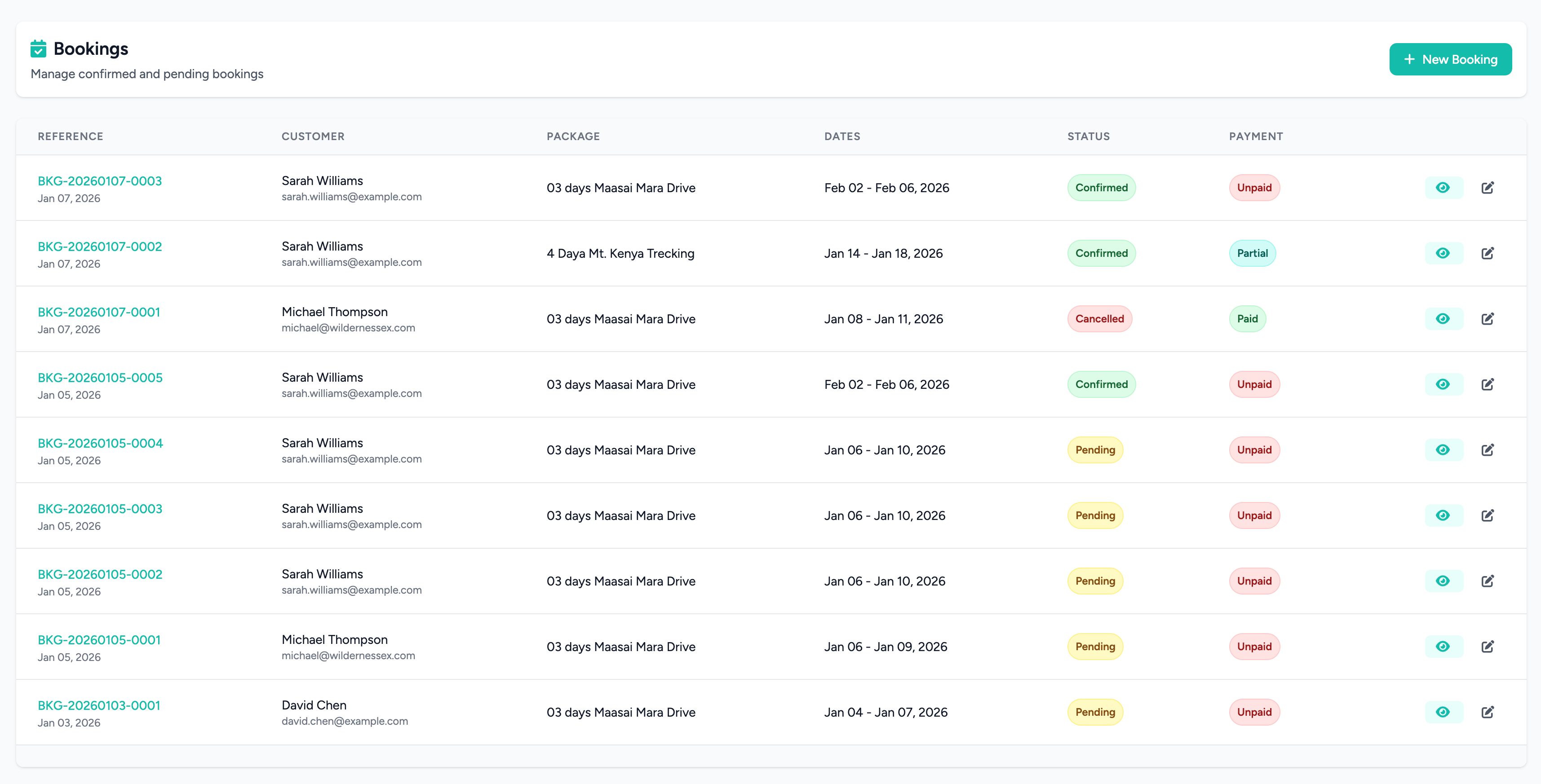
A booking in SafariFlow is the central record that ties the itinerary, customer, supplier costs, invoices, payments, and vouchers together — so confirming a trip, tracking what's been paid, and generating the paperwork all happen from one place instead of five.
The booking as the hub, not just a line in a list
It's easy to think of "bookings" as a table of rows — client name, dates, status. In practice, a booking is the record everything else in the operation hangs off of: it's what the itinerary becomes once a client approves it, it's what a voucher is generated against, it's what an invoice bills for, and it's what a payment gets reconciled to. Treating it as the hub — rather than one more standalone list — is what keeps the rest of the platform from becoming disconnected tools that happen to share a company name.
What that connection looks like in practice
- From itinerary to booking: an approved itinerary converts into a booking without re-entering trip dates, pax counts, or pricing.
- From booking to invoice: invoices are generated against the booking's actual total, in the currency the client was quoted, with partial-payment tracking as deposits and balances come in.
- From booking to vouchers: hotel and transfer vouchers are generated per supplier directly from the booking's dates and guest details — not typed separately.
- From booking to fleet and driver assignment: once confirmed, a booking can be staffed with a vehicle and driver checked against a live schedule, not a shared spreadsheet.
Status tracking that reflects reality
A booking isn't just "confirmed" or "not confirmed." Payment status, supplier confirmation status, and trip status can all move independently — a trip can be fully paid but still waiting on a supplier confirmation, or confirmed with suppliers but only partially paid. Reporting on "what's outstanding" only works if the system tracks these as separate, real states rather than collapsing everything into a single status field.
"...and others": where this extends
The booking record is also the anchor for a handful of adjacent capabilities worth a mention:
- Multi-currency handling for bookings quoted in one currency and settled against suppliers in another.
- Commission tracking for agent-sourced bookings, calculated against the same booking record rather than a separate spreadsheet.
- Reporting and analytics — revenue by package, booking pipeline, and outstanding balances all read from live booking data instead of a month-end export.
Bottom line
The value of good booking management isn't the booking screen itself — it's that every other feature (itineraries, vouchers, fleet, finance) reads from and writes back to the same record. That's what turns a list of trips into an operating system for the business.
Ready to automate your safari operations?
Start your free 14-day trial of SafariFlow — no credit card charged during trial.
Start Free Trial