GPS Fleet Tracking for Safari Tour Operators: What It Actually Takes
"Tracking solutions for safari tours" covers three genuinely different products - wildlife telemetry, traveler trip-sharing apps, and fleet GPS tracking. If you're a DMC or tour operator, here's what actually applies to you.
Three different things called "tracking"
- Wildlife tracking — GPS collars and telemetry platforms like EarthRanger, built for conservancies and anti-poaching units to monitor animal movement.
- Traveler trip-sharing apps — consumer tools that let a guest share their own game-drive route, sightings, and photo waypoints with friends and family back home.
- Fleet GPS tracking — software that lets the operator see where their own vehicles and drivers are, in real time, across every active trip.
If you're a DMC, safari operator, or fleet manager, it's almost certainly the third one you need. This post is about that.
What fleet tracking actually needs to handle on safari
Vehicle tracking sounds simple until you run it across an actual safari operation, where the constraints differ from tracking a delivery van in a city:
- Patchy or no signal. Large stretches of the Maasai Mara, Serengeti, or Samburu have unreliable connectivity. A system that assumes constant signal just shows a driver as "missing" for hours — worse than useless when a client is asking where their vehicle is.
- Multi-day, multi-leg trips. A single booking might involve several vehicles, drivers, and parks over a week. Tracking needs to tie to the actual trip assignment, not a generic "where is vehicle #4" view.
- Staleness matters more than raw location. Showing a dot on a map is easy. Telling someone honestly that a location is 40 minutes old — instead of quietly presenting stale data as live — is what actually builds trust with clients and ops staff.
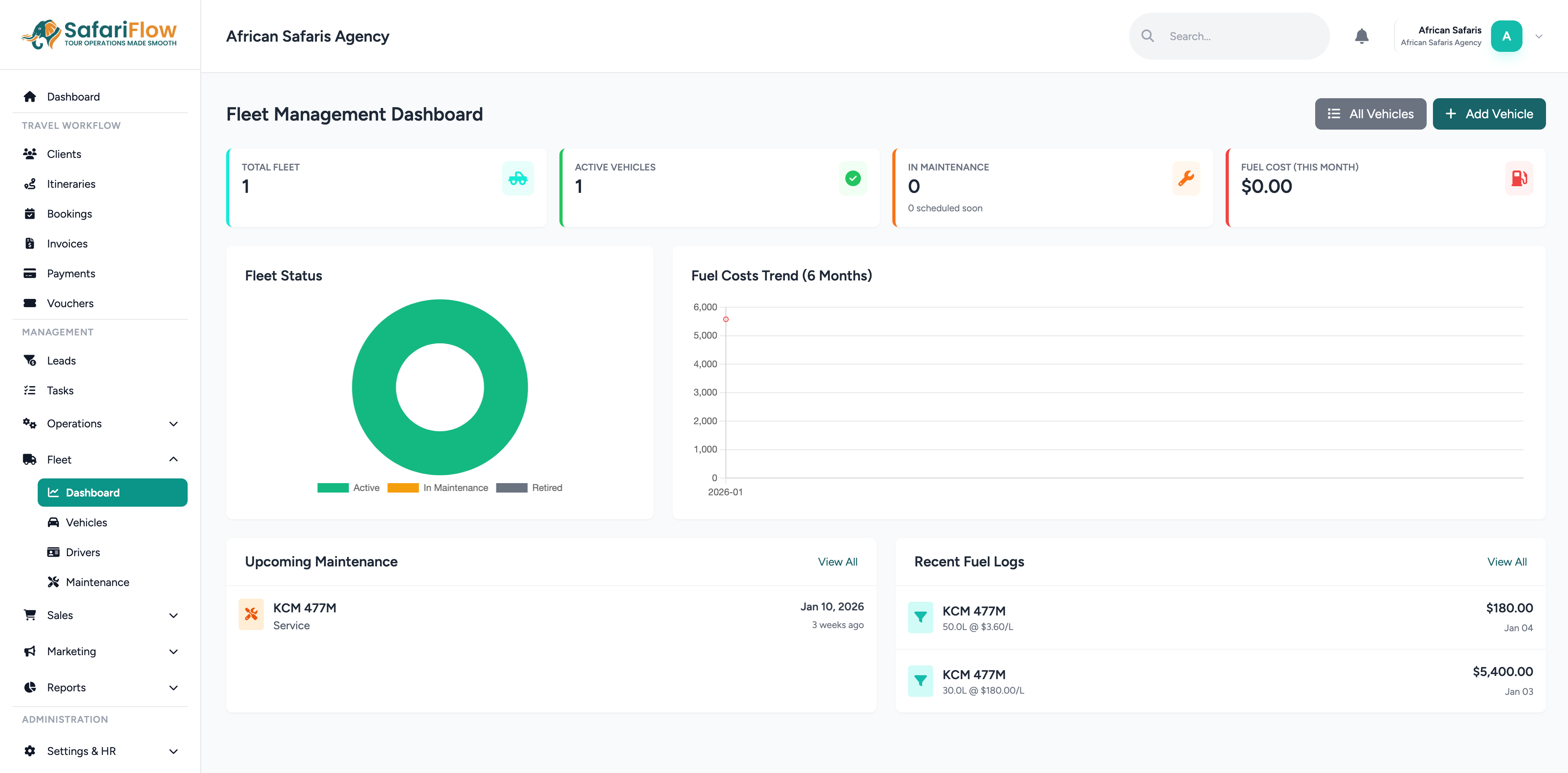
- It shouldn't live in its own silo. Location data is far more useful connected to the same system tracking fuel costs, maintenance, and driver assignments, not a separate app the ops team has to cross-reference by hand.
How this works in SafariFlow
- Drivers report location through the native driver app, built offline-first for the low-signal conditions common in remote parks — location data queues locally and syncs once connectivity returns, instead of silently failing.
- Every trip assignment shows the vehicle's current location on a live map, with an honest "last seen" indicator whenever the data isn't fresh.
- Location, fuel fill-ups, and maintenance jobs all live in the same system — a fuel record or maintenance job posts straight to the books, no separate spreadsheet or double entry.
- It's tied to the same fleet and driver assignment records the ops team already uses to build itineraries and assign vehicles.
Bottom line
Fleet tracking on safari has to account for bad signal, multi-day multi-vehicle trips, and honest staleness reporting — a generic delivery-fleet tracker doesn't. Built into the same system as fuel, maintenance, and driver assignments, it stops being a separate map to check and becomes part of how the operation actually runs.
Ready to automate your safari operations?
Start your free 14-day trial of SafariFlow — no credit card charged during trial.
Start Free Trial